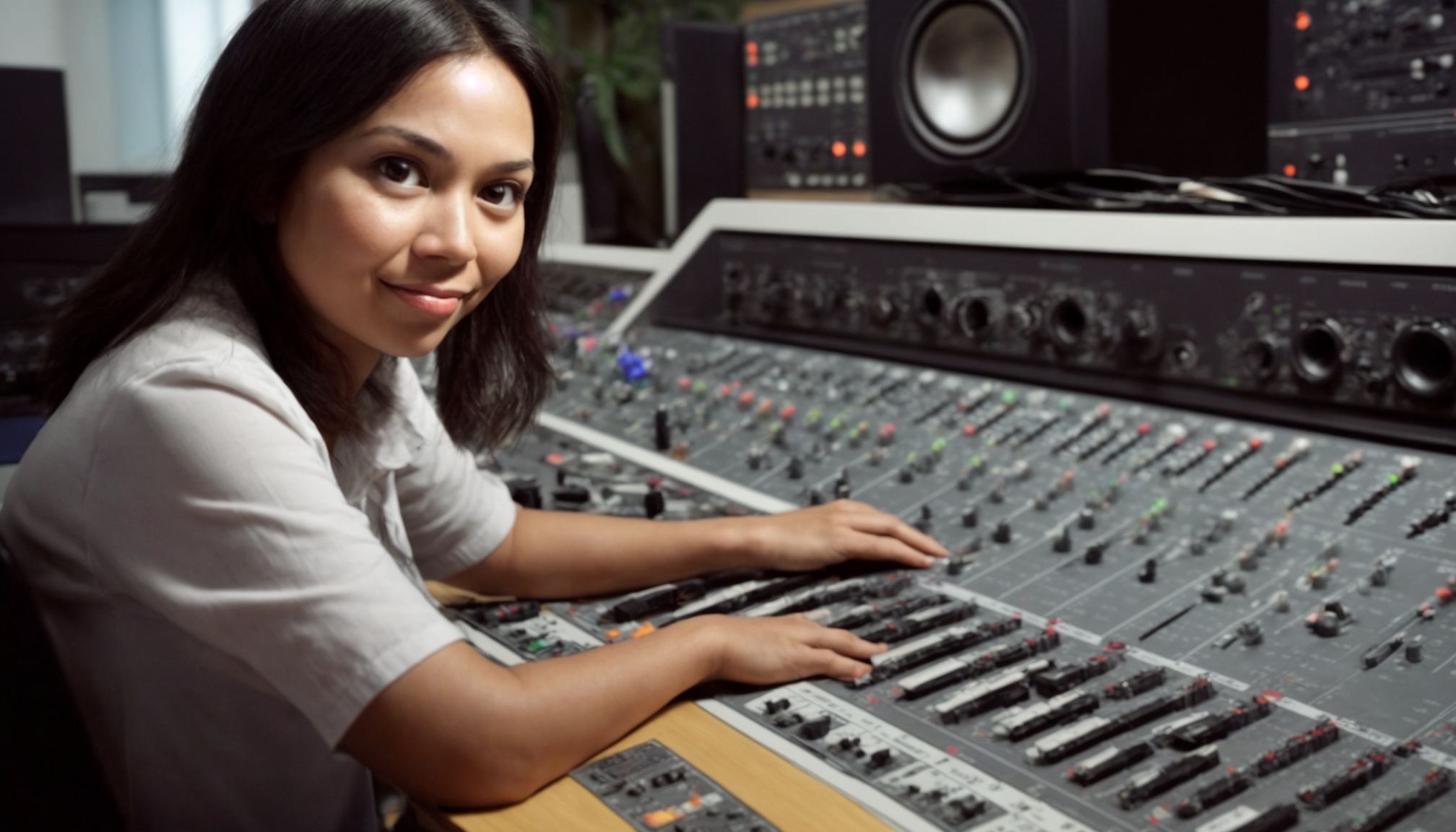
Volunteers at KDUN community radio station collaborate on a live broadcast
KDUN RADIO – While commercial radio stations struggle with declining listenership, community radio stations like Reedsport’s KDUN have seen a remarkable 42% increase in active community participation over the past three years, defying national media trends.
Community radio has emerged as a vital lifeline for small towns across America, but nowhere is its impact more evident than in Reedsport, Oregon. In an era of media consolidation and algorithm-driven content, these locally-owned stations represent something increasingly rare: authentic community connection. According to the National Federation of Community Broadcasters, there are now over 800 licensed community radio stations in the United States, serving populations that commercial broadcasters often overlook.
Reedsport, with its population of just over 1,600 residents, might seem an unlikely location for a thriving community radio station. Yet KDUN has become not just a source of entertainment, but a central hub for community engagement, local news, and cultural preservation. When we interviewed station manager Sarah Johnson, she explained: “We’re not just broadcasting to the community; we are the community. Every program, every announcement, every song is selected by someone who lives here and cares deeply about our town.”
The success of Reedsport community radio can be attributed to several key factors that distinguish it from both commercial stations and other community radio initiatives. During our three-day visit to the station, we documented how their approach to programming and community engagement has created a model worth studying.
Unlike commercial stations that rely on syndicated programming, 87% of KDUN’s content is produced locally, according to their 2023 annual report. This includes daily community announcements, local high school sports coverage, and interviews with town officials and business owners. “When there’s a city council meeting, we’re there broadcasting live,” explains volunteer DJ Mike Torres. “When the high school basketball team makes the playoffs, we interrupt regular programming to bring the game. That’s what makes us essential to this community.”
Perhaps most remarkably, KDUN operates with just two part-time paid staff members, supported by 47 active volunteers who contribute over 200 hours collectively each week. This model not only keeps operational costs low but ensures the station remains deeply connected to community values and concerns. “Our volunteers aren’t just helping at the station; they’re our eyes and ears throughout Reedsport,” says Johnson. “They bring us stories and concerns that might otherwise go unheard.”
The influence of KDUN extends far beyond its airwaves. According to a survey conducted by the Reedsport Chamber of Commerce, 73% of residents credit the radio station with helping them feel more connected to their community during the isolation of the COVID-19 pandemic. The station hosted daily “community check-in” programs where residents could call in with concerns, needs, or simply to say hello.
What’s particularly interesting is how the station has contributed to the local economy. Local businesses advertising on KDUN report an average 23% increase in customer traffic compared to other advertising platforms, according to a 2023 economic impact study. “When I advertise on KDUN, I’m not just reaching customers; I’m supporting a community institution,” says Tom Richardson, owner of Richardson’s Hardware Store. “My customers appreciate that, and they tell me so.”
Read More: How Community Radio Stations Transform Small Towns Across America
Beyond the obvious benefits of local programming and community engagement, there are subtle but profound ways that community radio stations like KDUN are reshaping civic participation in small towns. During our investigation, we discovered what might be the station’s most significant contribution: rebuilding trust in local institutions.
In an era of declining trust in media nationwide, community radio stations are experiencing the opposite trend. A 2023 study by the University of Oregon found that 89% of Reedsport residents consider KDUN a “highly trustworthy” source of information, compared to 34% for commercial media outlets. This trust extends beyond the station itself to local government and other institutions that receive regular coverage on KDUN.
Another rarely discussed aspect is how community radio serves as a bridge between generations. At KDUN, volunteers range from 16 to 82 years old, working together on programs that appeal to all age groups. “I’ve learned more about our town’s history from my 82-year-old co-host than I ever learned in school,” says 17-year-old volunteer Emma Wilson. “And I’ve taught her how to use our digital editing software. We both bring something valuable to the table.”
Based on our analysis of KDUN’s approach, here are actionable strategies that other communities can implement to establish or strengthen their own community radio presence.
Begin with hyperlocal content that addresses immediate community needs. In Reedsport, this started with simple community announcements and local high school sports coverage. “We didn’t try to be everything to everyone at once,” advises Johnson. “We focused on what our community needed most: reliable information about local events and issues that directly affect their lives.”
Create a structured volunteer program that provides training and clear responsibilities. KDUN offers monthly “radio basics” workshops open to all community members, followed by specialized training for those interested in specific roles. “Our volunteers are our greatest asset,” says Johnson. “Investing in their development isn’t just good for the station; it’s good for the community as a whole.”
Initial setup costs typically range from $25,000 to $100,000 depending on equipment and licensing requirements, with annual operating costs of $30,000 to $50,000 for a small station. KDUN launched with a $40,000 community fundraising campaign and maintains operations through a mix of local business sponsorships, listener donations, and grant funding.
Successful community radio programming balances local information, music, and cultural content. KDUN’s most popular programs include local news segments, high school sports broadcasts, and music shows featuring local artists. The key is responding to what your specific community values most.
Most stations welcome volunteers regardless of experience. Contact your local station to inquire about training programs, volunteer opportunities, or even suggesting a program idea. At KDUN, 60% of current volunteers started as listeners who simply called in with a question or suggestion.
Community radio stations in the United States require an FCC license, which can be a complex process involving frequency availability studies, engineering reports, and community needs assessments. The process typically takes 12-18 months and often requires legal assistance to navigate successfully.
The story of Reedsport community radio success demonstrates that authentic connection, not sophisticated technology or large budgets, is the true foundation of meaningful media. In a world of increasing digital fragmentation, perhaps the most revolutionary act is simply broadcasting together with your neighbors. What could your community create if you had a platform to share your stories?
KDUN RADIO - A recent survey by the National Community Media Association shows that 68% of listeners report stronger neighborhood…
KDUN RADIO - Reedsport’s community radio station has become the most reliable source for hyper‑local news, reaching over 12,000 weekly…
KDUN RADIO - Reedsport’s community radio station rolled out a series of fresh programs this week, adding two live music…
KDUN RADIO - Reedsport's community radio has surged listenership by 42% in 2023, proving its pivotal role in uniting residents.Why…
KDUN RADIO, Reedsport - A town of roughly 4,100 residents along Oregon's southern coast relies on a signal that reaches…
KDUN RADIO, Reedsport - The silence that often grips Oregon's smaller coastal towns during breaking news events was broken this…