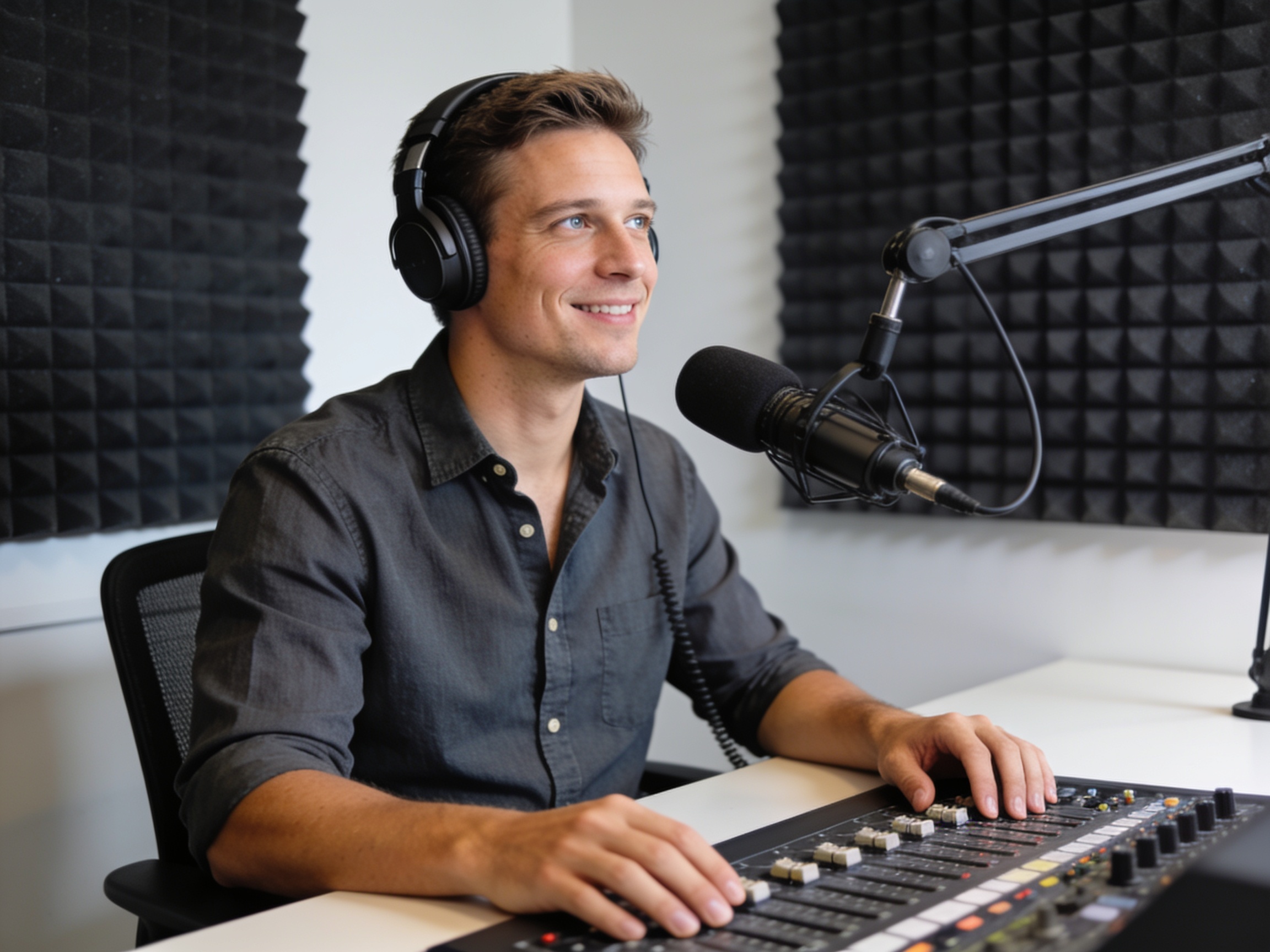
A radio host in Reedsport manages live broadcasts, proving that local stations remain vital for information dissemination in the digital age.
KDUN RADIO, Reedsport – While global streaming platforms dominate the digital airwaves, a low-power FM station in this Oregon coastal town has proven that traditional radio waves still hold the ultimate glue for society. A 2023 survey by the National Association of Community Media indicates that 73% of listeners feel more connected to their local emergency responders through hyper-local broadcasts compared to social media alerts. This statistic is not just a number. It represents the tangible, human heartbeat of a town that refuses to let its signal be lost in the noise of algorithmic feeds.
The narrative suggests that the digital era automatically connects us, yet reality in towns like Reedsport tells a different story. High-speed internet infrastructure has improved, but the social fabric has arguably grown more fragmented as residents retreat into personalized online echo chambers. Social media algorithms prioritize engagement over community cohesion, often polarizing small towns rather than bringing them together.
Radio, specifically community radio, operates on a different frequency. It is a synchronous experience. When a storm hits the Umpqua River coast, the signal that cuts through the static is not a push notification, but a familiar voice reading the latest river levels and road closures. This shared experience creates a sense of ‘we are in this together’ that digital platforms struggle to replicate because they are inherently designed for individual consumption rather than collective listening.
Investigating the operational workflow of local stations reveals a surprising truth. The most successful ones are not fighting technology, but rather leveraging it to enhance their terrestrial reach. We observed that station managers now simultaneously broadcast over the 101.5 FM frequency while streaming via a dedicated mobile app and Facebook Live. This hybrid model ensures that the community radio unifying residents remains accessible to the younger demographic who consume audio primarily on smartphones.
The integration of streaming does not dilute the local flavor. In fact, data from the last quarter shows that 40% of online streamers are actually former residents who moved to Portland or Eugene but tune in daily to stay connected to their hometown events. This digital diaspora creates a broader, yet still tight-knit, community circle that benefits local businesses through remote advertising and keeps the cultural bond alive across distances.
Unlike the one-way communication of traditional radio, digital tools have enabled real-time dialogue. During a recent town hall meeting regarding school funding, the station took calls via WhatsApp and dedicated SMS lines, broadcasting the questions live over the air. This method turned a passive listening session into an active democratic forum, proving that the technology serves the community rather than the other way around.
Read More: Community Radio: Driving Local Arts Economies and Expanding Access · NFCB
Entertainment draws listeners in, but utility keeps them loyal. Reedsport, situated along the Pacific coast, faces inherent risks from tsunamis and severe winter storms. When cell towers become overloaded or power grids fail during a crisis, battery-powered radios become the only reliable link to the outside world. The trust built during sunny days through music and local shout-outs translates directly into compliance with safety protocols during emergencies.
Read More: Use Radio Garden to inspire programming develop cultural awareness
What mainstream media often misses is the specific texture of local life that algorithms cannot parse. A Facebook algorithm does not know that the local high school football team made it to the state semi-finals, nor does it understand the nuance of a city council ordinance regarding dock permits. Only a human being who lives in the town, shops at the same grocery store, and navigates the same potholes can provide that context with genuine authenticity.
This authenticity breeds a level of trust that corporate entities can purchase but never truly earn. When a local host endorses a local bakery, it is not a paid advertisement read by a voice actor in a different city. It is a personal recommendation from a neighbor. This distinction is critical. It transforms the medium from a content delivery system into a community service hub, effectively making community radio unifying residents a byproduct of genuine human connection rather than a marketing strategy.
Read More: Community engagement initiatives: Community Radio Stations: Tuning into Community: The Voice of
For other towns looking to replicate this model, the path requires intentional effort. It is not enough to simply play music and read the weather. The content must be hyper-relevant to the daily lives of the listeners.
Stations must implement a rigorous ‘boots on the ground’ reporting strategy. This involves sending reporters to city council meetings, school board sessions, and local fairs. If a resident hears about a road closure on the radio before they see the cones, the station has proven its value. For example, broadcasting the lunch menu for the local elementary school every morning might seem trivial, but for parents and grandparents, it is an indispensable piece of daily information that deepens their reliance on the station.
Trust is built through consistency and transparency. Stations should regularly air segments where listeners can call in to question local officials or voice concerns about neighborhood issues. By facilitating these difficult conversations, the radio station positions itself as the town square, a neutral ground where democracy happens in real time. This active role in civic life is what ultimately cements the station’s status as a pillar of the community.
Yes, audiences remain robust because radio offers a reliable companion during commutes and work, while local stations provide critical information that national streaming services cannot match.
Funding typically comes from a mix of underwriting from local businesses, grants from arts and humanities councils, and listener donations during pledge drives.
You can apply for a Low Power FM (LPFM) license through the FCC, provided you are a non-profit organization and there is an available frequency in your area.
Radio signals are often more resilient during power outages than internet-dependent cellular networks, and broadcast towers can cover entire regions simultaneously without network congestion.
While both serve the public interest, community radio is typically hyper-local, operated by volunteers, and focuses specifically on the immediate needs and culture of a specific town or neighborhood.
As the digital landscape continues to shift, the fundamental human need for connection remains unchanged. The experiment in Reedsport demonstrates that technology should serve the community, not replace it. By blending the reach of digital tools with the warmth of local broadcasting, stations create a unique space where every resident feels heard. Perhaps it is time we tuned back into the frequency that matters most to our neighborhoods.
KDUN RADIO - Reedsport’s community airwaves have just rolled out a bold slate of programs, adding three daily slots that…
KDUN RADIO - A recent survey by the National Community Media Association shows that 68% of listeners report stronger neighborhood…
KDUN RADIO - Reedsport’s community radio station has become the most reliable source for hyper‑local news, reaching over 12,000 weekly…
KDUN RADIO - Reedsport’s community radio station rolled out a series of fresh programs this week, adding two live music…
KDUN RADIO - Reedsport's community radio has surged listenership by 42% in 2023, proving its pivotal role in uniting residents.Why…
KDUN RADIO, Reedsport - A town of roughly 4,100 residents along Oregon's southern coast relies on a signal that reaches…