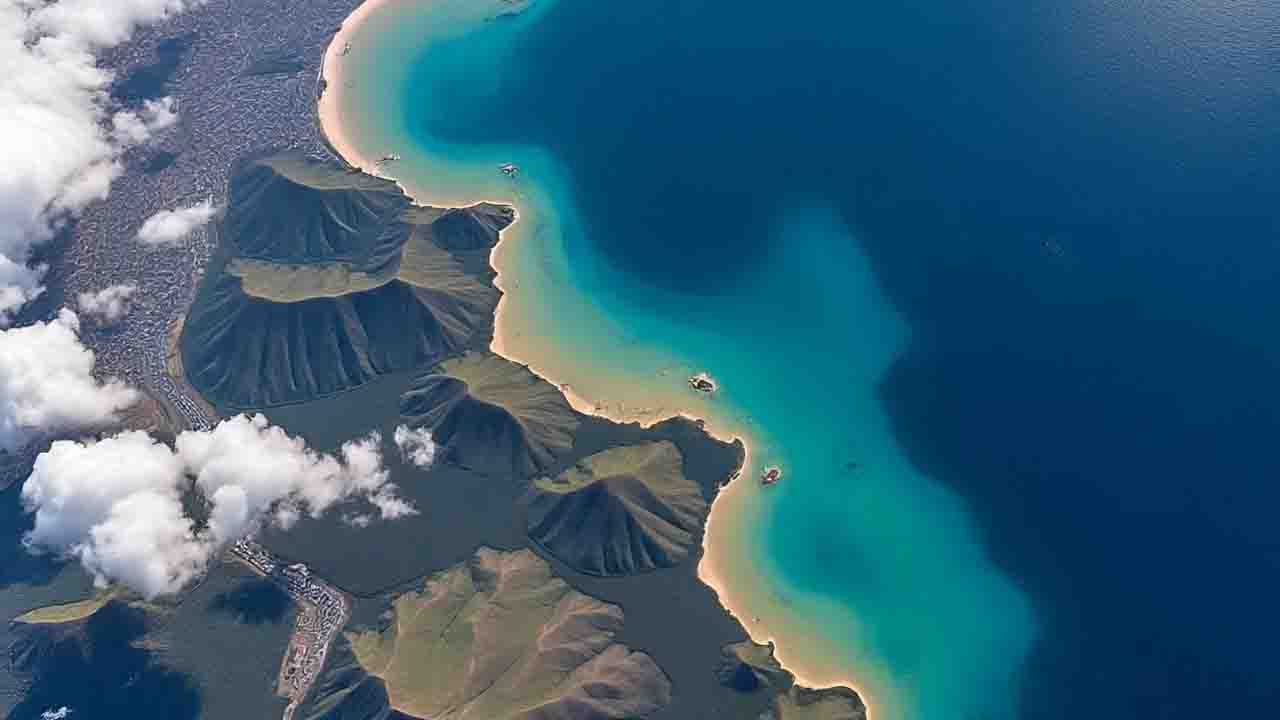
Kdun – Shockwaves Across the Pacific began on Tuesday evening, July 29, when a powerful 8.8 magnitude earthquake struck off the Kamchatka Peninsula in Russia. The tremor, one of the strongest recorded in the region in over a decade, sent immediate concern rippling across borders prompting tsunami warnings along the entire Pacific Coast of the United States, from Alaska to Southern California.
Despite the massive distance between Kamchatka and North America, emergency alert systems were activated in coastal communities, including Coos County, Oregon. Local officials urged residents to remain vigilant, stay informed through official channels, and prepare for possible evacuation if necessary. Although no immediate damage was reported on U.S. soil, monitoring agencies remained on high alert.
The event served as a live test of global earthquake and tsunami response systems. Within minutes of the initial quake, seismic data triggered automatic alerts from the U.S. National Tsunami Warning Center (NTWC), the Japan Meteorological Agency, and others in the Pacific Tsunami Warning System.
“Zendaya & Florence Reunite for Nolan’s Upcoming Sci-Fi Epic”
Shockwaves Across the Pacific also sparked real-time cooperation between American, Russian, and Japanese agencies. While early modeling showed the potential for significant wave activity, by late evening, predictions were downgraded though advisories remained in place in vulnerable low-lying areas.
Cruise lines in the Pacific were rerouted as a precaution, and several West Coast harbors temporarily suspended operations. The tremor’s depth and direction played a major role in the minimized wave impact.
Shockwaves Across the Pacific serve as a stark reminder that geological events in one region can reverberate globally. Experts noted that while modern technology has improved tsunami readiness. Such events underscore the importance of continuous education, preparation, and international collaboration.
While the quake itself did not result in immediate casualties or catastrophic damage, seismologists warn that aftershocks could follow. As communities across the Pacific breathe a cautious sigh of relief. The world is once again reminded of the interconnected, unpredictable force of nature.
“Classrooms to Cosmos: 235 Student Finalists for NASA-ISRO”
KDUN RADIO - A recent survey by the National Community Media Association shows that 68% of listeners report stronger neighborhood…
KDUN RADIO - Reedsport’s community radio station has become the most reliable source for hyper‑local news, reaching over 12,000 weekly…
KDUN RADIO - Reedsport’s community radio station rolled out a series of fresh programs this week, adding two live music…
KDUN RADIO - Reedsport's community radio has surged listenership by 42% in 2023, proving its pivotal role in uniting residents.Why…
KDUN RADIO, Reedsport - A town of roughly 4,100 residents along Oregon's southern coast relies on a signal that reaches…
KDUN RADIO, Reedsport - The silence that often grips Oregon's smaller coastal towns during breaking news events was broken this…